Research Updates:
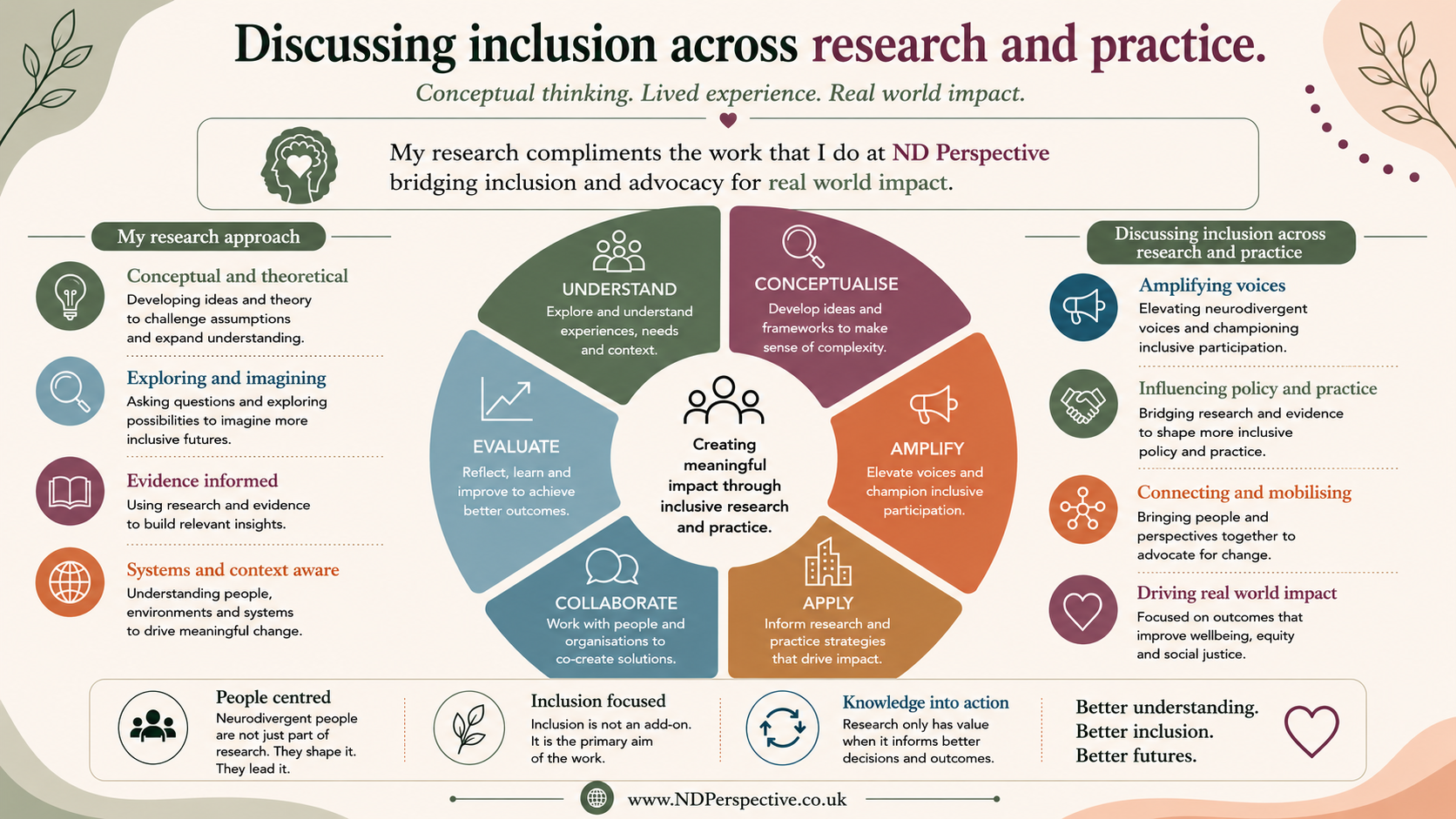
This page brings together my latest research, publications, reflections, and emerging ideas as they develop. My work sits within Organisational Psychology and focuses on inclusive research design, workplace inclusion, and understanding neurodivergent experiences through a neurodiversity-informed lens. At its heart, my research explores how environments, systems, relationships, and expectations shape participation, well-being, and inclusion across work and everyday life.
Although much of my work is published within academic journals and professional spaces, it is deeply shaped by ongoing engagement with neurodivergent communities, lived experience, and the everyday realities people navigate. I believe research is most meaningful when it connects with people’s lives and contributes to practical, positive change.
Across this page, you will find summaries of my publications, reflections on key ideas, and updates on research and projects currently in development. I aim to share ideas in ways that feel accessible and relevant, bridging academic and everyday language so that research can be engaged with by a wider audience, including neurodivergent people, practitioners, educators, employers, and organisations interested in creating more inclusive environments.
The Eight Principles of Neuro-Inclusion (Dark, 2024)
The Eight Principles of Neuro-Inclusion were developed in response to a persistent challenge within research: many people are still not fully heard, and their experiences are not always understood or represented in ways that reflect their intended meaning. This work began through reflection on these gaps and a growing recognition that inclusion involves more than participation alone. It raised important questions about how research might become more inclusive in the ways people are engaged, supported, listened to, and understood throughout the research process.
The principles were developed to encourage more thoughtful, flexible, and inclusive approaches to research design, recognising that meaningful inclusion is shaped not only by who takes part, but also by how people’s knowledge, experiences, and perspectives are recognised, interpreted, and valued.
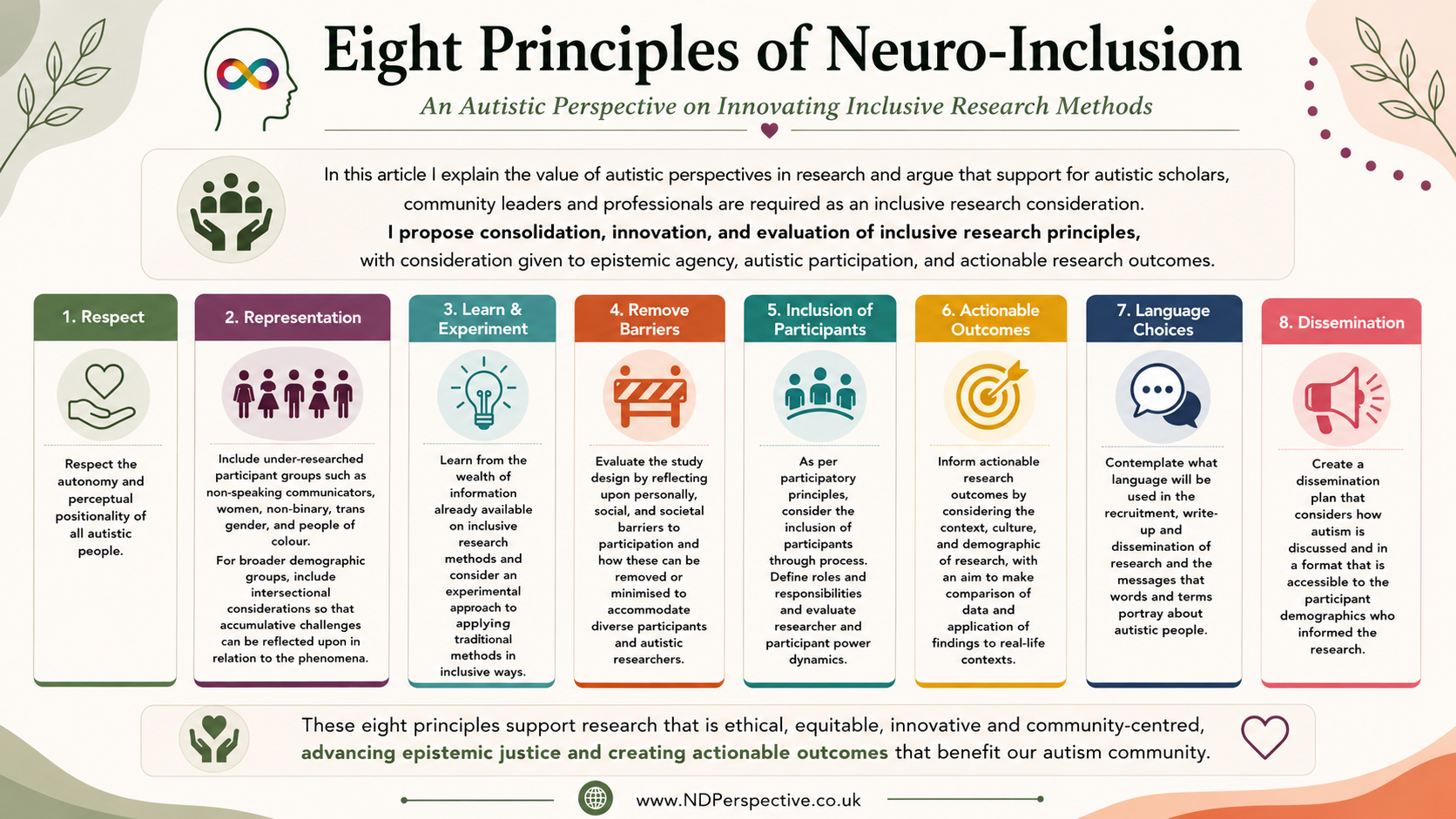
These inclusive principles encourage reflection on how research is designed, who is represented, how participation is supported, and the ways knowledge is interpreted and shared. As well as promote a thoughtful, flexible, and responsive way of working that considers how people experience research across the entire process.
Neuro-Cognitive Trait Interaction Model (Dark, 2025)
The Eight Principles of Neuro-Inclusion laid an important foundation for thinking differently about research, drawing attention to participation, representation, language, and meaningful impact. Through this work, a deeper understanding began to emerge: inclusion is shaped through an ongoing interaction between people, processes, expectations, and environments.
From this point, the Neuro-Cognitive Trait Interaction Model (NCTIM) began to take shape. The model shifts attention towards how participation is experienced in practice, recognising that neurodivergent ways of thinking, communicating, processing information, and engaging with the world are shaped through interaction with the demands of a given environment. Participation is not experienced in the same way by everyone, and the conditions surrounding research can influence how people engage, respond, and share their experiences.
This perspective moves the conversation beyond fixed categories and towards a more dynamic understanding of inclusion, where participation is shaped through context, interaction, and lived experience. In this way, inclusion becomes something that is thoughtfully designed into research, supporting approaches that are more responsive, flexible, and reflective of neurodivergent lives.
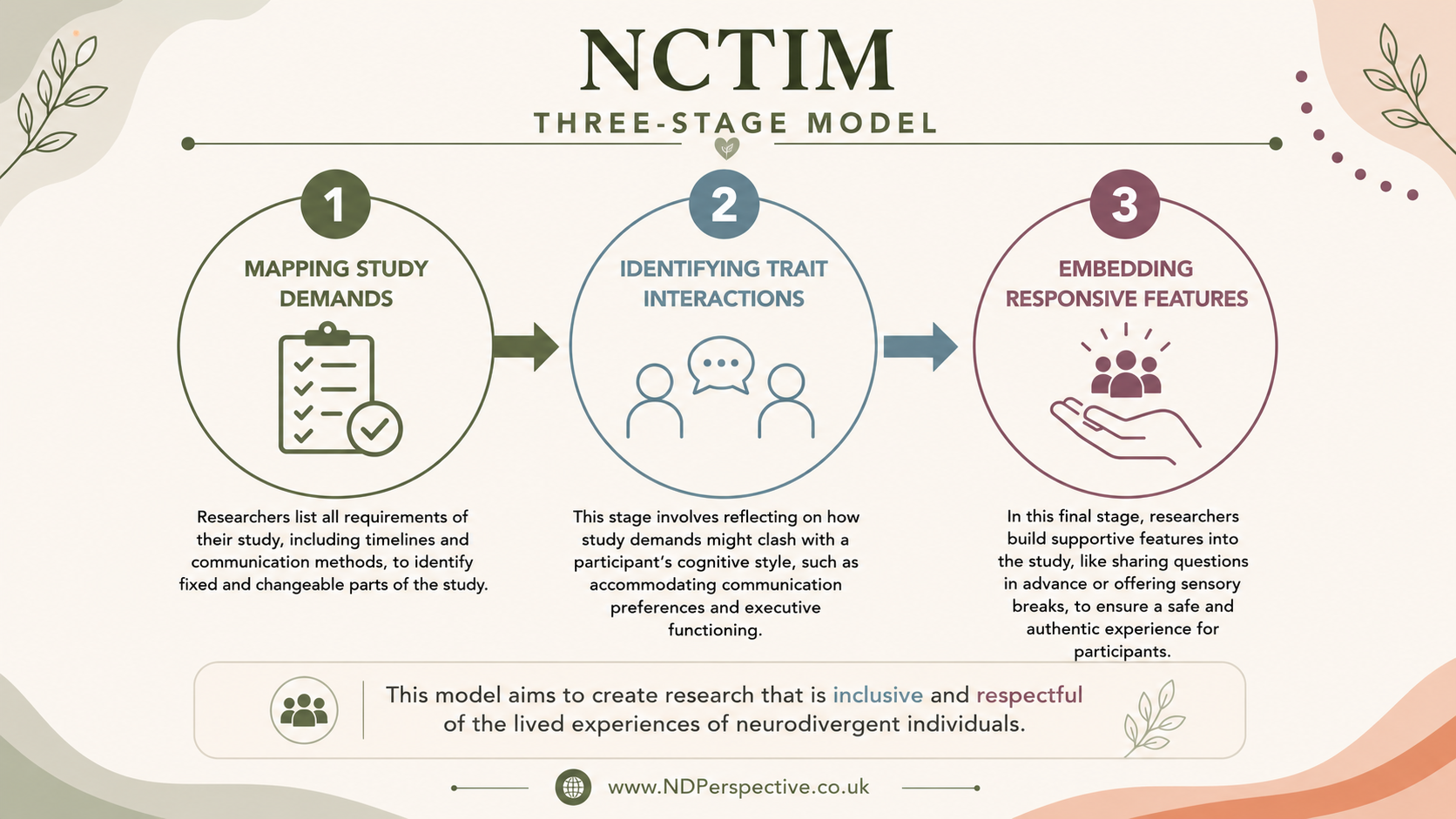
The Neuro-Cognitive Trait Interaction Model (NCTIM) moves beyond relying on diagnostic labels alone and instead considers how different ways of thinking, processing information, communicating, and experiencing the world interact within particular contexts. This creates a more nuanced understanding of participation, recognising that experiences are shaped not only by a person, but also by the environments, expectations, and demands they encounter.
At its core, NCTIM offers a structured yet flexible approach to inclusive research design. The model is organised around three interconnected stages: first, understanding the demands of the research itself; second, considering how these demands may interact with different neuro-cognitive traits; and third, embedding responsive features that reduce barriers and support meaningful participation. In doing so, the model encourages more thoughtful, adaptable research that reflects the diverse ways people engage with the world.
The model encourages a reflective, responsive approach to research design, supporting researchers in thinking carefully about how participation is experienced and shaped in practice. It draws attention to the interactions among people, research processes, and environments, helping create the conditions that better align with different ways of processing information, communicating, and engaging.
The System-Level Organisational Design Framework (Dark, 2026)
Building on the Neuro-Cognitive Trait Interaction Model (NCTIM), the System-Level Organisational Design Framework (SLODF) extends this work into workplace and organisational practice. SLODF explores how neurodivergent people’s experiences of work are shaped through the interaction between cognitive processing traits and the wider conditions around them. It considers how environments, systems, relationships, communication, and organisational expectations influence access, participation, wellbeing, and sustainable working experiences. The framework brings together four connected areas of organisational life:
Environment: How physical, sensory, digital, and social environments influence comfort, access, participation, and well-being.
Systems: How workplace processes, communication pathways, workloads, expectations, and organisational structures shape everyday experiences.
People: How leadership, relationships, psychological safety, communication, and mixed neurotype teams influence inclusion and workplace culture.
Policy: How organisational policies, reasonable adjustments, inclusive practices, and formal support structures shape experiences across work.
Together, these four areas support a joined-up understanding of neuro-inclusion across workplaces. SLODF encourages reflection on how organisational design shapes experiences of work and offers a practical framework for considering inclusion across environments, systems, people, and policy.
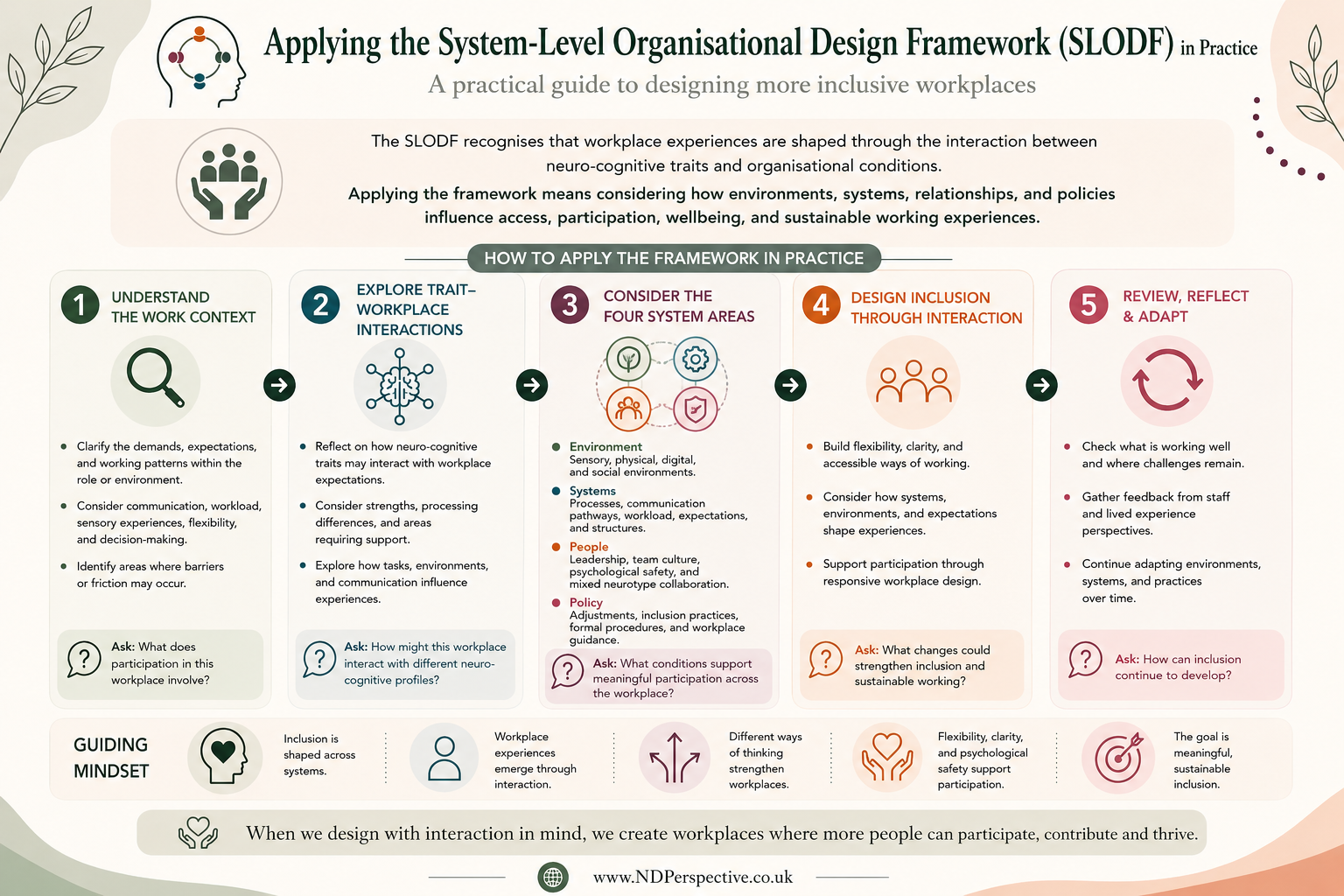
By considering environments, systems, people, and policy together, SLODF supports more inclusive and sustainable work experiences for neurodivergent people and the broader workforce.